
Refinance Reasons
Thinking about a Refinance?
There are many reasons to consider a refinance, below are the primary reasons to refinance a mortgage.
1. Rate & Term Reduction or Extension
The most common reason for refinancing is to take advantage of lower market interest rates or refinancing to adjust how long you will be paying off your home. Normally in half the time if you go from a 30yr to 15yr. But, there may be circumstance when extending your turn can be beneficial, see the four reasons below.
-Reduced Monthly Payments: A lower rate directly reduces the monthly principal and interest payment, freeing up cash for other expenses.
-Long-Term Savings: Even a small reduction (e.g., 0.5% to 0.75%) can save tens of thousands of dollars in interest over the life of the loan.
-Pay Off Early: Switching from a 30-year to a 15-year mortgage helps build equity faster and reduces the total interest paid, though monthly payments usually increase.
-Improve Cash Flow: Extending the term (e.g., restarting a 30-year term) can significantly lower monthly payments to provide immediate budget relief.
2. Access Home Equity (Cash-Out Refinance or HELOC)
Typically mortgages carry the lowest interest rates. When homeowners are considering borrowing money for home repairs, paying off high-interest debt or other investments a cash-out refinance can be the best option.
Home Improvements: Many homeowners use these funds to renovate or repair their property, which can further increase its value.
Major Expenses: Equity can be used for college tuition, medical bills, or purchasing an investment property.
Debt Consolidation: You can use cash-out funds to pay off high-interest debt like credit cards or car loans, consolidating multiple payments into one lower-interest mortgage payment.
3. Change the Loan Type
Homeowners often refinance to move between different types of mortgage products for better stability or features.
ARM to Fixed-Rate: Switching from an adjustable-rate mortgage (ARM) to a fixed-rate mortgage provides predictable, stable monthly payments that won't increase if market rates rise.
Government to Conventional: Moving from an FHA or VA loan to a conventional mortgage can sometimes remove specific fees or restrictions.
4. Eliminate Mortgage Insurance
When some consumers buy a home with less than 20% down they will be required to buy Mortgage Insurance. Refinancing can help remove Private Mortgage Insurance (PMI) or Mortgage Insurance Premiums (MIP)
PMI Removal: If your home's value has risen or you've paid down enough principal to reach 20% equity, refinancing into a conventional loan can eliminate the monthly cost of PMI.
FHA to Conventional: Since FHA loans often require insurance for the life of the loan, refinancing to a conventional product is often the only way to stop paying it.
If both cases, if you are able to remove the forced insurance, the savings can be substantial!
5. Manage Ownership Changes
Refinancing is frequently used to update the legal parties responsible for the mortgage. Of course you can remove an owner from title, but there only 2 way to remove a borrower form a mortgage. One is to refinance the loan payoff and the other is to sale the property to pay off the original mortgage. Below is the most common reasons to refinance a borrower off of a mortgage loan.
Remove a Co-signer: If you originally needed a co-signer to qualify, you can refinance to remove them once your own credit or income has improved.
Divorce or Separation: Refinancing is a common way to remove a former spouse from the mortgage note during a property transfer.
Conventional Fixed Rate Mortgages (FRM)

One of the advantages of a conventional loan is that the borrower can avoid paying the upfront mortgage insurance and possibly the monthly mortgage insurance of an FHA Loan. If a borrower makes a down payment of less than 20 percent on a conventional loan, the rates of mortgage insurance vary according to credit scores, debt-to-income ratio, the type of mortgage insurance a borrower chooses, as well as the loan-to-value ratio.
Rural Development Loan (USDA)

A USDA home loan is a zero down payment mortgage for eligible rural and suburban homebuyers. USDA loans are issued through the USDA loan program, also known as the USDA Rural Development Guaranteed Housing Loan Program, by the United States Department of Agriculture.
VA Mortgage Loans

Veterans Affairs (VA) mortgages, make it easier for veterans to obtain financing for homeownership. VA loans are available to veterans and active military members. VA loans are made are guaranteed by the Department of Veterans Affairs. and VA loans are somewhat easier to qualify for than conventional mortgages.
FHA Mortgage Loans

An FHA loan is insured by the Federal Housing Administration, a federal agency within the U.S. Department of Housing and Urban Development (HUD). The FHA does not loan money to borrowers, rather, it provides lenders protection through mortgage insurance in case the borrower defaults on his or her loan obligations. Available to all buyers, FHA loan programs are designed to help creditworthy, low to moderate income families who do not meet requirements for conventional loans.
Down Payment Options (DPA)

Down payment assistance (DPA) programs provide financial aid to help homebuyers cover upfront costs like the down payment and closing costs. As of early 2026, there are over 2,600 active programs nationwide, typically offering average benefits of approximately $18,000
Refinance Mortgage Loans

Refinancing a mortgage replaces an existing home loan with a new one, typically to secure a lower interest rate, change the loan term (e.g., 30-year to 15-year), or access home equity. It involves a new underwriting process, closing costs (usually 2%-5% of the loan amount), and pays off the old mortgage. There are different option and reasons to refinance, click the link to learn more.
Adjustable Rate Mortgages (ARM)
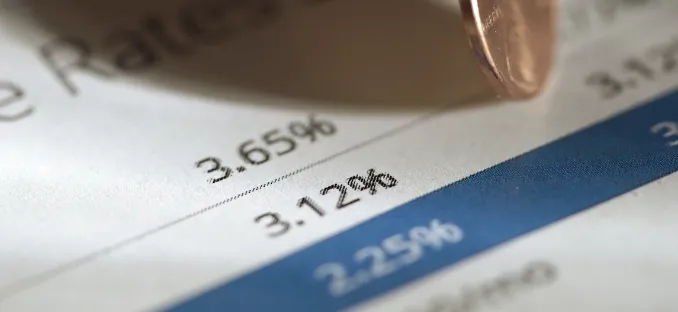
An Adjustable-Rate Mortgage (ARM) is a home loan with an interest rate that can change periodically over the life of the loan. Unlike fixed-rate mortgages, where the rate stays the same for the entire term, an ARM typically starts with a lower "teaser" rate that is fixed for an initial period—usually 3, 5, 7, or 10 years. Once this period ends, the interest rate resets at regular intervals (such as every 6 months or once a year) based on market conditions.
Home Equity Loans
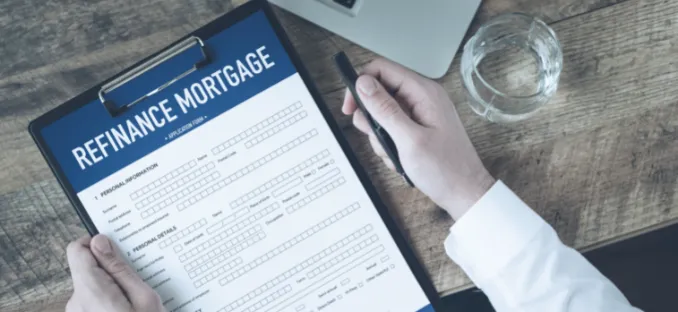
A home equity loan is a type of second mortgage that allows homeowners to borrow a lump sum of cash using their home's equity as collateral. It features a fixed interest rate and set monthly payments for a specific term (often up to 30 years), making it ideal for large, one-time expenses like home renovations or debt consolidation.
Real Estate Investors

Real estate investor loan programs are specialized financing options designed for non-owner-occupied properties. Unlike residential mortgages, these focus heavily on the income-producing potential of the asset rather than the borrower's personal income.
Self Employed Options

Self-employed loans are mortgage products designed for borrowers who do not receive a traditional W-2 salary, such as freelancers, contractors, and business owners. Because these individuals often use tax deductions to reduce their reportable income, they may struggle to qualify for traditional mortgages that rely solely on tax returns.
Construction Loans

A construction loan is a short-term (typically 12–24 months) loan used to finance the cost of building or renovating a home, covering land, materials, labor, and permits. Funds are disbursed in "draws" to the builder as project milestones are met. These loans usually require 20-30% down payments and, during the construction phase, typically involve interest-only payments. But there are now A one-time close construction loan (or single-close loan) combines land purchase, construction financing, and a permanent mortgage into one, single transaction with one set of closing costs. It streamlines the building process, allowing borrowers to lock in interest rates, pay interest-only during construction, and avoid re-qualifying when the home is finished.
Jumbo Loans

A jumbo loan is a type of "non-conforming" mortgage used to finance properties that exceed the annual conforming loan limits (CLL) set by the Federal Housing Finance Agency (FHFA). Because these loans are too large to be purchased by government-sponsored entities like Fannie Mae or Freddie Mac, lenders take on more risk and typically enforce stricter qualification standards
quick info
Garrett Financial Group LLC
NMLS: 2392973
(313) 580-1020
2000 Oakley Park Rd Suite 204-B,
Commerce Township, MI 48390
Legal
Legal
Privacy Policy
Terms and Conditions
State License: MI- FL0024912
Federal NMLS# 2392973

© Copyright Garrett Financial Group LLC 2026. All rights reserved.